Is Identity Theft Protection Worth It? What You Get and What You Can Do Free
For most people in the US, paid identity theft protection is a convenience, not a necessity. The two tools that actually stop a thief from opening new credit in your name, a credit freeze and a fraud alert, are free by law, and you can check your credit reports from all three bureaus every week at no cost. What a paid plan really sells is watching more places than you would check yourself, plus a case manager who does the paperwork if something goes wrong. That can be worth paying for, but only after you have done the free steps, and only if you know what the plan will not catch.
Why this question is louder right now
Identity theft is not slowing down. In a September 24, 2026 release, Rep. David Kustoff's office cited the Identity Theft Resource Center's 2025 report: a record 3,322 data compromises in the US last year, 2,236 of them involving Social Security numbers. The same release put identity theft reports to the FTC at 1.36 million in 2025, up 19.6 percent from 2024. In early October, Bloomberg reported that a 2025 breach of Oracle Health's legacy Cerner systems exposed personal information of nearly 20 million people, citing figures released by the Texas attorney general.
There is also a small piece of good news for victims. The Improving Social Security's Service to Victims of Identity Theft Act (H.R. 5345) became Public Law 119-119 on October 7, 2026. It requires the Social Security Administration to give anyone whose Social Security number was misused a single point of contact who stays with the case until it is resolved, and the sponsor's office says it also covers Social Security cards lost in the mail. That makes the free recovery route a little less painful, which is part of what paid services charge for.
What a paid plan actually does
The FTC splits these products into four parts. Most plans bundle several of them, so it helps to know what each one is.
Credit monitoring
Credit monitoring watches your credit report at one, two or all three bureaus (Equifax, Experian and TransUnion) and alerts you when a new account opens, a lender checks your credit, a payment is reported late or your personal details change. The FTC points out what it won't catch: money taken straight out of your bank account, or someone using your Social Security number to file a tax return and collect your refund. It also only reports what has already happened. A monitoring alert tells you a fake account exists. A freeze stops it from being opened.
Identity monitoring
Identity monitoring looks beyond your credit file: change-of-address requests, court and arrest records, new utility or wireless accounts, payday loan applications, and sites where stolen data is traded (the "dark web scan" in most ads). According to the FTC, most of these services still won't alert you if someone uses your information to file a tax return or claim Medicare, Medicaid, Social Security, welfare or unemployment benefits. Those are some of the most damaging kinds of identity theft, and you protect against them through the agencies themselves, as described below.
Recovery help
This is the part many people underrate. Recovery services give you a counselor or case manager who helps write letters to creditors and debt collectors, places freezes and walks you through the documents. Some will deal with creditors directly if you formally give them permission to act for you. The FTC notes that you can do much of this yourself for little or no cost, but if the idea of weeks of calls and letters fills you with dread, this is the real product.
Identity theft insurance
The large "up to $1 million" figures in ads refer to this. The FTC says this insurance usually covers out-of-pocket costs of reclaiming your identity: copying, postage, notarizing documents, lost wages and legal fees. It generally won't reimburse the money a scammer actually stole. Read the policy before you let a big number sell you the plan.
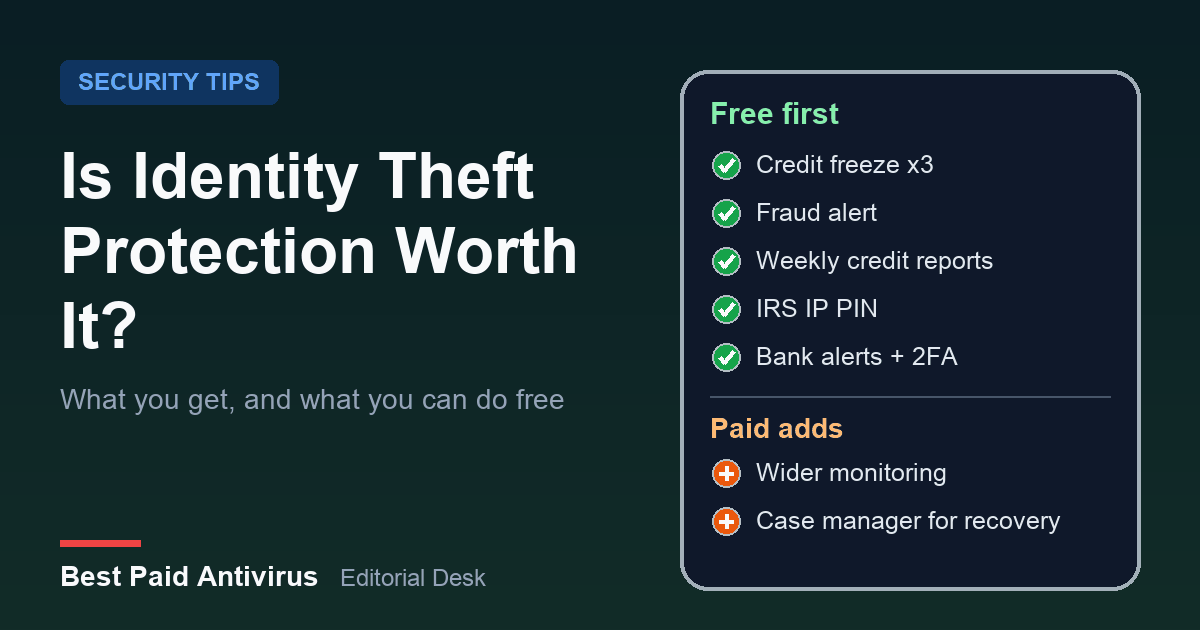
The free version: six steps that cover most of the risk
- Freeze your credit at all three bureaus. A freeze is free to place and lift, it doesn't affect your credit score, and it lasts until you lift it. While it is on, nobody can open a new credit account in your name, including you, so lift it at the bureau a lender uses when you apply for credit and put it back afterward. You have to contact Equifax, Experian and TransUnion separately.
- Add a fraud alert if you think your data is out there. An initial fraud alert is free, lasts one year and tells businesses to verify it is you before opening credit. You only contact one bureau; it must tell the other two. Confirmed victims who file a report at IdentityTheft.gov can get a seven-year extended alert.
- Check your credit reports every week, free. The three bureaus have permanently extended weekly free reports at AnnualCreditReport.com, the only site authorized for the free reports required by federal law. Watch out for look-alike sites that ask for a card number.
- Get an IRS Identity Protection PIN. This six-digit number stops anyone else from filing a federal tax return with your Social Security number or ITIN, which is exactly the gap that credit monitoring misses. Anyone with an SSN or ITIN who can verify their identity can opt in, usually through an IRS online account, and a new PIN is issued each calendar year. The IRS will never call, email or text to ask for it.
- Turn on alerts at your bank and card issuers. Most banks and card issuers can send a text or app alert for every transaction or for anything over a set amount, which covers the bank-account theft that credit monitoring ignores. Add two-step verification to email and financial accounts, and use a password manager so a breach at one site doesn't unlock the rest.
- Check what you already get free. The FTC notes that monitoring often comes through your bank or credit union, card provider, employer benefits or insurer. A company that leaks your data often offers free credit monitoring in its breach letter. Some antivirus suites also bundle identity features, so check your current plan before you pay twice.
When paying makes sense
- You have already been a victim, or your Social Security number was in a breach, and you want someone else to manage the recovery.
- You are protecting older parents or children who will not check reports or freeze credit themselves. Family plans that cover several people can be simpler than doing it all by hand.
- You value broader monitoring (address changes, court records, payday loans, data trading sites) enough to pay for it, and you understand it alerts you after the fact.
- You know you will not keep up with weekly reports and alerts. A service you actually use beats a free routine you never start.
When to skip it
- Your credit is frozen at all three bureaus, you get bank alerts and you check AnnualCreditReport.com now and then. Paid credit monitoring adds very little on top of that.
- You are paying mainly for the insurance figure. It covers recovery costs, not stolen money.
- You already get monitoring through a breach settlement, your bank, your employer or your antivirus bundle.
How to check a plan before you buy
Start with the questions the FTC suggests: How often do you check my credit reports? Which bureaus do you monitor? Is there a limit on how often I can see my reports, and is there a charge each time? What else is included? Then add three of your own:
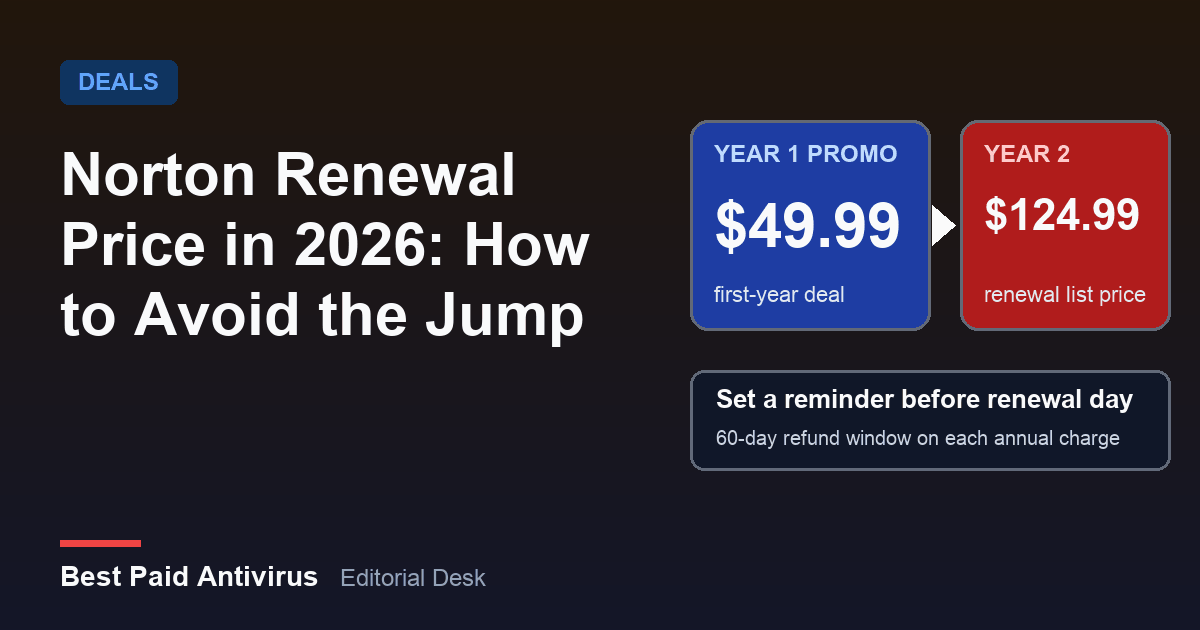
- What is the renewal price? Identity plans are often sold like antivirus, with a cheaper first year and a higher automatic renewal. Our guide to the Norton renewal price jump shows how big that gap can be and how to switch off auto-renewal.
- Does it monitor all three bureaus? Cheaper tiers often watch only one.
- Who does the recovery work? Ask whether a named case manager will contact creditors for you, or whether you just get a checklist.
If you are comparing bundles that pack antivirus, a VPN and identity monitoring into one subscription, our look at full internet security suites and the antivirus vs VPN guide explain which parts you are likely to use. Our Norton 360 Deluxe review covers one of the most common bundles.
If you want to see how paid plans present their features, this overview walks through several popular services. It ranks products on its own criteria, so treat it as a feature tour rather than a verdict:
If your identity has already been stolen
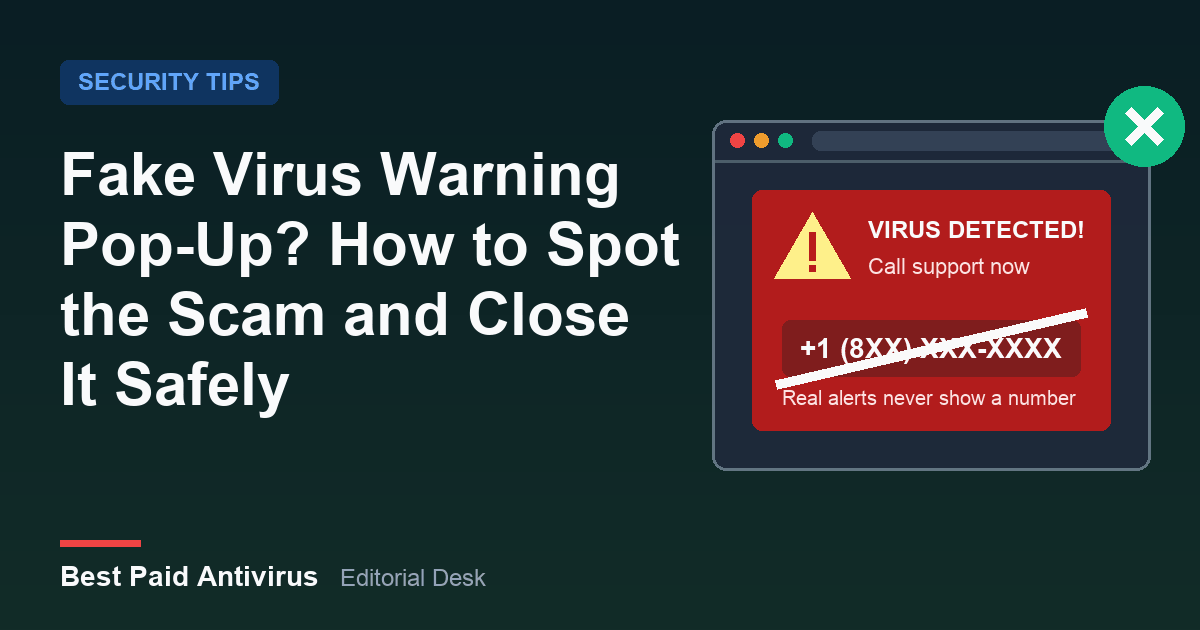
Go to IdentityTheft.gov, the FTC's official site, to report it and get a personalized recovery plan. Freeze your credit at all three bureaus, call the fraud departments of any company where an account was opened or misused, and change the passwords on your email and financial accounts from a device you trust. If your Social Security number was misused, the new law means the Social Security Administration should give you a single point of contact for the case. And be careful who you trust: the FTC warns that people who have already been scammed are targeted by "recovery" scammers who promise to get money back for an upfront fee. If a call about a refund or a virus pushes you to pay or give remote access, read our guide to the fake virus warning scam before you do anything.
The bottom line
Do the free steps first: freeze your credit at all three bureaus, get an IRS IP PIN, turn on bank alerts and check your reports at AnnualCreditReport.com. After that, a paid plan is worth it only if you want broader monitoring and someone to handle the recovery work, and only at a renewal price you are happy to keep paying.
Sources
- FTC: What to know about identity theft (monitoring services, recovery services and identity theft insurance)
- FTC: Credit freezes and fraud alerts
- FTC: Free credit reports
- FTC: Refund and recovery scams
- IRS: Get an identity protection PIN
- IdentityTheft.gov: Report identity theft and get a recovery plan
- Congress.gov: H.R. 5345, Improving Social Security's Service to Victims of Identity Theft Act (Public Law 119-119, October 7, 2026)
- Office of Rep. David Kustoff: Social Security identity theft bill heads to the President (September 24, 2026)
- SecurityWeek: Oracle Health data breach tally climbs to nearly 20 million (October 2026)
Frequently Asked Questions
Is identity theft protection worth it?
For most people it is optional. A credit freeze, a fraud alert and weekly credit reports are free and stop most new-account fraud. A paid plan adds wider monitoring and a case manager to handle recovery, which can be worth it if you were already a victim, your Social Security number was in a breach, or you are protecting family members who will not do the free steps.
What does identity theft protection not cover?
According to the FTC, credit monitoring will not alert you when money is taken from your bank account or when someone files a tax return with your Social Security number, and most identity monitoring will not catch benefit fraud such as Medicare, Social Security or unemployment claims. Identity theft insurance usually covers recovery costs, not the money that was stolen.
Is a credit freeze better than credit monitoring?
They do different jobs. A credit freeze stops new credit accounts from being opened in your name and is free at Equifax, Experian and TransUnion. Credit monitoring only tells you after something appears on your report. Most people get more protection from a freeze than from paid monitoring alone.
How do I protect my tax refund from identity theft?
Get an IRS Identity Protection PIN. It is a six-digit number that stops anyone else from filing a federal return with your Social Security number or ITIN. Anyone who can verify their identity can opt in, usually through an IRS online account, and a new PIN is issued every calendar year.
Written by the Best Paid Antivirus editorial desk from published lab results, vendor documentation and official guidance. Spotted something out of date? Tell us. Some links may earn us a commission; see our affiliate disclosure.